To live we must choose a life, a commitment. We must move from a series of disconnected experiences to a way of life with all its hopes and disappointments. That choice can come to us in a variety of ways: an inner voice, aptitudes, skills, gifts; or what brings us joy or where we find our creativity most exposed.
But this is a path less travelled, for it is our path. But to choose this path is to renounce other possible paths. Perhaps this is one reason why the psychological age of youth with its exploration of possibilities stretches well beyond chronological youth now. There are so many alternatives that might be taken up, which to choose? To choose one might close down others, so choosing one is postponed. But, funnily enough, life itself is postponed. As Jesus said, to choose life will always bring some death with it.
Showing posts with label vocation. Show all posts
Showing posts with label vocation. Show all posts
Monday, 5 October 2009


Thursday, 17 September 2009
To Fulfil Our Promise, That is All
I don't want to be anything special, I only want to try to be true to that in me which seeks to fulfil its promise. (Etty Hillesum)
Wednesday, 9 September 2009
Vocation: The Coincidence of Your Gifts and Passions And The Deepest Needs Of Your Neighbour

The tendency is to limit the circle of those we are to be concerned with. But if God has counted every hair on our heads, it is difficult to see how I can exclude you from the circle of my neighbour. This is hardly something new, but it must be said because in practice we don't do it. The lawyer who, in trying to justify himself and his question, says to Jesus, "Who is my neighbour?" is not thinking (at least at that stage) that the circle would include absolutely everyone. Even your enemy. (Lk 10:29-37; cf Matt 5:43-48)
This is important for a whole lot of reasons, including the obvious like peace and justice. But it is also important when discerning vocation. Our deepest vocation is to be found in the coincidence of our gifts, skills and passions and the deepest needs of our neighbour.
Please stop, please!
Silence!
Listen to the beating of your heart.
Listen to the blowing of the wind,
the movement of the Spirit.
Be silent - said the Lord -
and know that I am God.
And listen to the cry of the voiceless.
Listen to the groaning of the hungry.
Listen to the pain of the landless.
Listen to the sigh of the oppressed,
and to the laughter of the children.
Celebrating One World (CAFOD 1989)
Monday, 24 August 2009
Follow Your Gifts

Following on from God's Call (Part 1), the second part to my preaching series on God's call asks how we can discover our call. For most of us it doesn't come in a Damascus Road experience as depicted in the picture. So where do we start? You won't be surprised if I say that the identification and use of our gifts is crucial. It is really pretty obvious that if God has given us certain gifts and passions this should be explored as an indication that God's call is to be discerned in and through the exercise of these gifts and passions. But what if you don't see how these gifts or passions could be used productively in your life? Or can't see how they could make a contribution, or not see how you could make a living from them? Then, at this point, concentrate on developing your gifts. You might be born with a talent, but that isn't enough. We have to use, grow, develop our gifts and passions and, as we do, a door will be there at some point to open. Needless to say things might not work out how you thought. But after all, it is God's call to us that we are talking about.
Tuesday, 11 August 2009
God's Call

I'm doing a preaching series on God's call to each of us. In the first installment my major point was that the tendency in humankind is to live a karaoke life, singing the tune of someone else. And why not? It is familiar, we know it works, to some extent at least. And whether the karaoke life be an explicit parroting of another song, or whether it merely be a reaction to someone else's song, it is still someone else's song. Contrary to this, God has given each of us a particular task or contribution for the world, corresponding to our unique personhood. To find this unique task will take all our passion and gifts, and bring with it joy and sorrow.
To talk about this I used three readings taken from Francis Dewar, Invitations: God's Calling for Everyone (an excellent book):
Reading 1
God says to each one of us; “Come, I have a special task for you to do, something that you were born for, that will bring you untold fulfilment, through which others also may be freed or enriched or enlivened."
Reading 2
Jesus said, “Enter through the narrow gate; for the gate is wide and the road is wide and easy that leads to destruction, and there are many who take it. For the gate is narrow and the road is hard that leads to life, and there are few who find it."
Reading 3
On his death bed Rabbi Zuscha was asked what he thought life beyond the grave would be like. The old man thought for a long time, then he replied: ’I don’t really know. But one thing I do know, when I get to there I am not going to be asked ‘Why weren’t you Moses?’ or “Why weren’t you King David?” I am going to be asked, “Why weren’t you Zuscha?"
Tuesday, 14 July 2009
Love The Questions
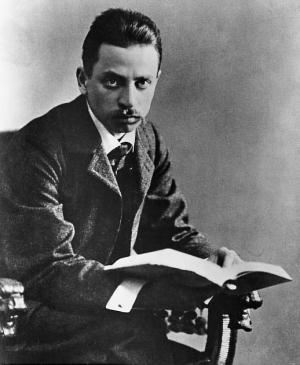
I want to beg you … to be patient toward all that is unsolved in your heart and to try to love the question themselves like locked rooms and like books that are written in a very foreigh tongue. Do not now seek the answers, which cannot be given you because you would not be able to live them. And the point is, to live everything. Live the questions now. Perhaps you will then gradually, without noticing it, live along some distant day into the answer.Rainer Maria Rilke
Monday, 6 July 2009
The Will of God

We ask to know the will of God without guessing that God’s will is written into our very beings. (Elizabeth O’Connor)
Tuesday, 21 October 2008
Choosing Involves Renunciation

Many of us find it difficult to make choices. This is not because we cannot find anything that suits our preference, but precisely for the opposite reason, namely, we find it difficult to exclude the things which will not be involved in our choice. Scholastic philosophers had the dictum: ‘Every choice is also a renunciation.’ This is very true since whenever we choose one thing, we necessarily exclude certain other things.
For this reason we find it hard to choose a vocation, an occupation, a set of friends, a life companion or even a new house or car. The difficulty arises because, in choosing, we have to limit ourselves, and our lonely, insatiable insides rebel against this. Thus we often end up dissipating our creative and affective energies: hanging loose, spreading ourselves too thin, unable to make clear choices and commitments, procrastinating indefinitely, being wishy-washy and generally being unable to make decisions which could give our lives more direction and thus help us to love and work more effectively.(Ronald Rolheiser)
Subscribe to:
Posts (Atom)