Following on from the last post, this from George Hunsinger is also worth a read on the historical reliability of the Gospels. He says that rather than having to prove the historical reliability of the Gospels as such, it is only necessary to show that the claims made in the Gospels have not been disproved.
Hunsinger agrees that more can be shown than this, but it is not necessary to do so. Historical probability (which is what we are always dealing with in historical research) is a certain kind of knowledge, but the New Testament accounts of Jesus invite a knowing that is not limited to historical probability. So, for example, he makes the observation that the key claim of the resurrection of Jesus is beyond historical proof, and that Christianity is asking for a response beyond what can be "proven" by historical probability.
Saturday, 22 May 2010


Friday, 21 May 2010
The Historical Reliability of the Gospels I
This summary of an article by CFD Moule in the late 50s is interesting on the early use of the Gospels. According to Moule the gospels were not for liturgical use (and therefore not merely reinforcement for worship) or high theology, but the basic story that grounded the liturgy and theology of the church in history. If this is true then it gets harder to dismiss the Gospels as fabrications merely reflecting the church's faith in Christ rather than documents written as historical record.
Thursday, 20 May 2010
Peace (Quote)
"Peace is not stasis; it is not the absence of violence: where there is isolation, separation and indifference between peoples, conflict can break out at any time. Nor is it simply civility and respect for the law, in which the walls of separation remain firm.
Peace, rather, is the counter-dynamic to competition, rivalry and the clash of strengths. Peace can only come when the chain of violence is broken and the weaker members of society are fully welcomed, loved and respected."
Jean Vanier

Wednesday, 19 May 2010
Pastoral Care and Unbaptised Secular Psychology
 There was a trend (that is still being played out) in the 70s and 80s toward the clergy re/training in the human sciences like psychology and social work, etc. For some it was a natural move given their liberal theological position that struggled to give faith, theology and even God any firm foundations other than as a cipher for justice and care for others. For some it also provided a little insurance against ecclesiastical caprice! This confusion between the human sciences and Christian theology and practice was evident in the training I received in pastoral care back in the mid-80s. A large part of our practice and reflection consisted of learning secular techniques of counselling and then constructing a theological justification for the use of these techniques. However, it was all a little too uncritical. (One of the ironies in this is that those who advocated the mostly uncritical use of the human sciences were often those most critical of the church's alleged uncritical baptism of political power in the time of Constantine and since.)
Now, the human sciences are an extremely valuable and pragmatic grab-bag of theory and practice that serve us all well. Good therapy, when you need it, is a great gift. However, to collapse Christian pastoral care into this grab-bag of psychology and medicine is a mistake. Pastoral care is more than psychology conducted in a Christian context or by Christians supplemented with prayer and Bible reading. (Although it can be this too.) When this collapse occurs the goals of Christian pastoral care and Enlightenment
 medicine and psychology become almost indistinguishable. For example, the tendency of the human sciences (and medicine) is to consider pain and suffering something to be avoided and eradicated. If it cannot be eradicated then the task is to help the client/patient cope with the pain. Well and good at one level, but we
  wouldn't want that to determine our response in toto. A specifically Christian response might be to spend some time on the person's relationship with God in the midst of the pain and suffering, and ask, "What practices might help this person remain faithful to God in the midst of this pain, and to know the continuing care of God in their life?" How might we help people cope with their experience of a providential God, their eschatological hope in the kingdom to come, and their current experience of confusion and alienation? The experience of pain and suffering can be a laboratory where we learn our need and renew our love for God in a more real manner. But that is a tough thing for a pastor to try these days because the aims of the secular human sciences and medicine have a virtual monopoly on the practice and goals of pastoral care.
Tuesday, 18 May 2010
The Christian Response to Suffering

"Suffering is presumed to have little of no meaning or purpose beyond the constant quest to eradicate it."(1)
There are lots of ways to respond, as a Christian, to suffering. To seek healing comes to mind, as does the eradication of the pain that is causing the suffering, or sitting in the dust with the those who suffer, prayer, lament, anointing, confession and absolution, and that's just for starters. The problem is that all these practices and their accompanying theologies share too much space in our heads with the Enlightenment's optimism and trust in humanity's ability to control 'nature' generally and overcome pain and suffering specifically. These days we have to fight pretty hard not to succumb to the now generally accepted principle that pain and suffering are to be avoided at all costs. (See quote above) In this view a return to health is understood in terms of the absence of pain and suffering for the autonomous individual. Once healed the autonomous individual can return to their individual life having the suffering and its cause eradicated from their life. In this view, we would have no need, at least in respect of that particular pain and its cause. There is, of course, something desirable and good in the eradication of pain and suffering. But as the sole way of looking at our human condition, or even the dominant way, it is mistaken because it misunderstands the human person and presents an utterly fraudulent hope. We are not autonomous individuals with healing returning us to a needless state, thank you very much. And second, we cannot live lives devoid of pain and suffering, and even if this particular instance of it can be eradicated, just wait, one day it won't be eradicated. One only has to look around us to see that the hope of avoiding pain is a vain one. (I'll be blogging later this week about the asceticism of life, or the asceticism that we should be teaching our children is an absolutely essential and unavoidable part of life.)
Jesus commands us to
 embrace the cross. Let's not make a straw figure of the crucified Christ as though he is commanding us to hate ourselves. Self-hate is not the only alternative to the unrequited hope of avoiding suffering. The call to carry the cross and follow Jesus is a call to actively suffer at times (witness, justice, etc), and not to fear the suffering that might come from bearing the pain of grief rather than burying it alive, and not to fear facing the truth of our psychopathologies and the pain such self-honesty will bring. But more than this, a specifically Christian response to suffering will also include those practices that help us remain faithful in the midst of suffering, and that help us continue to believe in the God who seems often absent. This last, so often overlooked, is an entirely appropriate response to suffering from those who claim to follow the forsaken, crucified Jesus. Jesus' cry of dereliction from the cross is, after all, a prayer, and is a prayer of faith, not disbelief. The lament, prominent in the Psalms and elsewhere in Scripture, is exactly one of those practices that can keep us faithful, but more on that later.
1. John Swinton, "Patience and Lament: Living Faithfully in the Presence of Suffering", in Francesca Arran Murphy and Philip Ziegler, The Providence of God. p. 276.
Monday, 17 May 2010
Hildegard of Bingen

"... and through the sublimity of the Father, who sent the Word with sweet fruitfulness into the womb of the Virgin, from which He soaked up flesh, just as honey is surrounded by the honeycomb." (Hildegard of Bingen)
Saturday, 15 May 2010
The Concert

I've just watched the movie The Concert. It's a good movie, although for most of it you wonder if you could have waited for it to come out on DVD. It seems a bit on the low budget side, with characters more than a little cardboard cut-out like, and a potentially moving story that never seems to quite pull itself together despite plenty of opportunities to do so. Then comes the final 20 minutes or so. And all is redeemed. But that anticipates too much; first the story.
Filipov was the maestro of the Bolshoi Orchestra, until he and the orchestra were fired under the communists as enemies of the people. 30 years later he is the janitor at the Bolshoi, and Filipov intercepts an invitation from the Chatelet in Paris for the Bolshoi to play. He secretly takes the fax and puts together a motley crew from the past to play. Until the very end we are lead to think that Filipov is the father of the famous violinist soloist who will play with the orchestra in Paris. Filipov strangely misses the opportunity to tell her that he is her father and in the process she cancels the concert. But in the end she plays, the concert goes ahead, and they are brilliant together. And we discover that Filipov, rather than being the hero who stood up for his Jewish musicians all those years ago and lost his job for his moral clarity, in fact brought them to the attention of the authorities because he loved the power of the music they made together. His favourite violinist was not just arrested but dies in the gulag with her husband. But not before their baby girl is handed over to Filipov to spirit away to France. And yes, the solo violinist of the concert is that little baby now a great violinist herself. All is revealed, and the threads are brought together. The film itself seems to lose its cheap graininess and becomes beautifully clear and colourful. And the Tchaikovsky Violin Concerto is played beautifully as all is revealed. The disharmony of the previous 30 years, the failings of Filipov, the injustice, all of it is picked up beautifully and poignantly in the music as it is played, and woven into a harmony that is sheer beauty.
The shame, injustice, disappointment and death of the past 30 years is not scrubbed clean in the end. Rather it is woven into something grander through the actions of the protagonists as they have a chance to redeem the past. it might seem a bit simplistic but how very trinitarian it all was! The protagonists immersed in a history of failure, without a happy ending in sight most of the movie, in fact a sense of a second grade movie for most of its duration, comes to a surprising ending that sheds light on all that has gone before. The resurrection of Jesus (and all that it implies in terms of the kingdom of redemption) is that surprising ending. Redemption is possible, without justifying the failure and its suffering, yet weaving the disharmony into a beautiful concerto. Faith sees it, although dimly at times. Yet when the story reaches its climax its graininess will be transformed and woven into the beauty of the story of the crucified-risen Christ.
Tuesday, 6 April 2010
Rowan Williams on Augustine (Quote)

Undoing some cheap and easy criticisms of Augustine from Rowan Williams. I cut this from Ship of Fools...
What everyone remembers, of course, is the things you got wrong – or the things we're quite sure you got wrong.How you painted yourself into a corner over predestination, God deciding before all time who was to go to heaven and who not. And women; we get very indignant that you had difficulty believing that women were really in God's image as much as men. We forget that this is what you did believe, and how difficult it was for you to square this with what everyone else in your age thought.
And we blame you for messing up Christian attitudes to sex, because for you it was an area of humiliation and tragedy – forgetting, again, that you truly thought sex between husband and wife had something of heaven in it.
We look for a scapegoat to explain why Western Christianity and Western civilization are so much of a mess. You wrote such a lot and so powerfully that I'm afraid you're a very good candidate for the position. But I think you would have turned around and challenged us: why the passion for a scapegoat? What are you refusing to look at in yourself?
In the City of God you explained the mechanisms: we're not sure in ourselves what we really love and value; we invest all our expectations in people and solutions inside this world, and they let us down cruelly. We feel restless and insubstantial because we don't know how and what to love. So we give ourselves a false solidity by pushing the darkness, the doubt and evil out there, projecting it onto some other person, some other group.
We get our solid identity from denying our own poverty and incompleteness. When I was teaching students about the City of God, I felt I really began to understand the Cold War.
So we can't learn to love unless we let go of the longing for solid, fixed identity. We start to grow up not when we become independent, but when we recognize that we shall always need the words and actions of others to give us life – and when we face that fact without resentment or shame.
Behind it all is the recognition that the only reason there is anything at all is the pure act of generosity that creates the world – it doesn't have to be there, God doesn't have to make it, but he wants his joy shared. When we know that, we know ourselves – not by introspection, because I shall always lie to myself about my motives, but by looking to the love that made me and remakes me.
Not a scapegoat, then, but someone who's taught me what I hope is the right kind of scepticism about myself and the world of power around me – and the right kind of trust in my maker.
Monday, 15 March 2010
Addicted to Anxiety (Quote)
"Most of us have half-a-dozen or so favorite anxieties, like bitter sweets we suck on endlessly. We would be frightened to be deprived of them. Jesus challenges us to go beyond the fear of letting go of anxiety, the fear we have of peace itself." Laurence Freeman
Thursday, 11 March 2010
Jesus and the Practice of Reconciliation
A guest post from the Revd Ron Keynes
I had the experience of preparing a young married woman for Confirmation,. She was married to a man who was somewhat bitterly atheist insisting that the classes be held at their home so that he could have the opportunity of decrying all the Christian baloney that he expected to be presented to the candidates. It made life hard for the several other adults in that group, though it was something of a steep learning curve for them. As each gathering dealt with various issues, he began to have his say, and then there was a chance for our views to be presented. I remember quite vividly the situation when it came to discussing the Story of the Fall, and the underlining of the fact that even Hebrew faith was dealing with what tends to be called the human dilemma, that this young man started to listen. When it came to the Cross and reconciliation, the husband began to see that, not only did the Faith present a response to an issue to fundamentally human, but also had a significant answer, that the bellicose responses began to assuage.
It was not long after that, that the same man stopped me in the street one Saturday morning, and asked if it were possible for him to change sides! You can imagine the delight of the wife to find that her husband would be confirmed alongside of her; you can imagine my own delight more than 30 years later, to be told that both those two had continued on their Christian pilgrimage! It was not ‘religion’ that convinced that young man, but the relevance of the reconciliation process.
After a lifetime of preaching, teaching and Bible Study – and exploring the wonderings of other people, it has been an interesting business when one finds that other people, much older and wiser, had been seeing things the way that had been occurring to me also. I remember, in College, having been stunned to read a book by Bishop Stephen Neil, then a Bishop in the Indian Church, underlining the strong point of contact between Christian Faith and Muslim, Hindu and Buddhist people was just this business of reconciliation. I had been concerned about the apparent oddity that the Christianity of the time and place where I grew up was more concerned with ‘personal holiness’ and seemed to produce little other than a refined form of selfishness.
If there is one huge and overwhelming issue that dogs the whole history of this planet, (and seems to be moving towards a drastic and destructive goal,) it is that human dilemma that seems to parallel ‘Murphy’s Law.’ Hatreds between individuals, groups and cultures – yes and even religions – manage to produce constant crops of destructive outbursts and wars, exacerbating the terrible conditions under which millions of people live. Greed and selfishness have people and people set at conflict with each other, with no regard given to the opposition. They are there to be destroyed. And the millennia of human history attest to the constant breaking out of such terror.
(There will be those who will cheer at these words, certain in their own minds that the great cause of this trouble lies at the feet of religion. That rather stupid and cheap shot may have some currency when it has to be said that there are those people on the lunatic fringe who provide enough examples establish the case in a way. However, the reality lies in the fact that those who indulge in such ugliness have distorted whatever Faith it is they profess, and in doing so have rendered their subject unrecognizable. There never has been any guarantee that humans will profess properly the Faith they ‘own,’ and distortions are far too common and damaging.)
Should there be some answer to this tragic state of affairs, then one would have thought that the person who invented the solution would make the traditional millions. The greater tragedy is that Someone has, whilst having no interest at all in the possible profit. But too many of His followers can only see that Jesus has saved them from Hell when in reality that Lord of ours offers answers to a far more immediate threat anyhow.
Read the Bible (dare I say it) sensibly and you will see that it is precisely this issue that is the focus from start to finish. From Genesis 3 and its diagnosis of the human ill, to Revelation which offers a goal to the people of the late First Century, who had the challenge of failing to see Jesus as Lord, because all the blandishments of Rome and commerce was blinding them to rather lesser goals. Genesis 3 is actually pointing up the fact that the real problem with us humans is, to put it in the Biblical terminology that we all want to be God and rule the rest of you. Those ancient authors were far from silly, and were certainly not naive. Actually, it is stunning to see that people of such a remote and unsophisticated (?) period of history had the insight to see the real issues.
Both the Old Testament prophets, (Isaiah in particular) realized and articulated the need for Someone to show the way, in real life and in real time. Isaiah 53 – one of the Servant Songs – doesn’t get the picture entirely right, but it is a clear and remarkable insight into resolution of the problem. And Jesus lived it, in life and on the Cross, showing the costly but effective path to reconciliation: and that much of that cost would have to be borne by the reconciler, not the offender. Here, of course, lies one of the real reasons why the ‘Jesus’ approach to reconciliation has tended to be disregarded. Humans are far less willing to follow in a direction that would seem to be rather demeaning to a proud person. But that is rather the point: pride is one of the great barriers to reconciliation, because ‘I prefer to blame the party of the other part,’ and that blocks the process.
Neither time nor space permits a complete look at this, but it is important to realize that the Cross of Christ is not just there to provide me with forgiveness. It is there as the process, par excellence, that restores the peace, provides justice and enables people to get along together regardless of what lies behind them.
Monday, 8 March 2010
Theology Begins When ... (Quote)
Theology begins with an unwillingness to believe that the reality of human beings and human society can be fully explained solely in material terms. Its agenda and subject matter is the exploration of how an openness to a different or fuller explanation of those realities is best articulated and an exploration of how the consequences of such openness bear upon individuals and society, their beliefs, the axioms and principles of social conduct and responsibility. Theology in the specific sense of God-talk is a particular subset of that exploration — the theistic premise regarded as the most appropriate starting point to construct a positive alternative to the purely materialistic explanation of what is — though the openness in many cases will include an openness to the possibility that the theistic premise is itself wrong or misleading’. (Jimmy Dunn)
I pulled this quote from Jason's blog again. He cut this from an interview with Dunn. For links to other great figures in theology check out the full post.
Wednesday, 3 March 2010
The Hollowness Within (Quote)
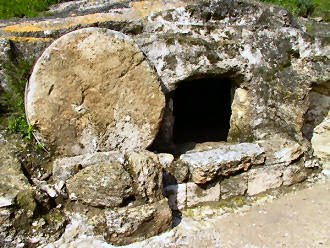 That hollowness we sometimes feel is not a sign of something gone wrong. It is the holy of holies inside of us, the uncluttered throne room of the Lord our God. Nothing on earth can fill it, but that does not stop us from trying. Whenever we start feeling too empty inside, we stick our pacifiers into our mouths and suck for all we are worth. They do not nourish us, but at least they plug the hole. Barbara Brown Taylor
Monday, 1 March 2010
The Messy Life and Soul (Quote)
Our search for God and our service to others will never be conducted in a neat world. Life will never submit to our good intentions, will never fall in line, will never stand still long enough to do our bidding.
Life will never cease to be a messy affair, and our spiritual journey will never be reduced to a tidying-up operation. God and the others don’t wait to enter our life until we have put it all in order. Our journey … is about finding God and serving others in the midst of the mess. The messiest place of all will be our own soul, our own life, which, despite our best efforts, will insist on remaining human. And it is into this mess, this confusion, that God and others will invite themselves. John Kirvan
Friday, 26 February 2010
I lifted this great quote from Per Crucem ad Lucem which is from Anthony Robinson here on why 'family' is not a great self-designation for a church.
‘Many of the congregations that claim “We’re a family,” lose sight of larger transformative purposes and settle, instead, for the comfort and satisfaction of their members. The core purpose of a congregation – growing people of faith and helping people and communities move from despair to hope – gives way to lesser and even contrary purposes like keeping people happy. While it may not be a necessary outcome of the use of the family image, many congregations that gravitate towards it seem to make member comfort and satisfaction their de facto purpose.That may be because “family” suggests to people something like, “We’re all loving and nice here.” That in turn often means no hard questions are asked and no honest challenges are allowed. It wouldn’t be nice.
I can think of other reasons to be cautious about “family” as our image for church. Families sometimes keep secrets that shouldn’t be kept in order to keep from bringing shame on the family name. And families aren’t typically that easy to join. Two of our sons were married in recent years. Turns out that putting families together is a fairly complex dance.
One last issue. The use of the term “family,” may communicate to people who are not married or to the married without children that they don’t quite fit. “Our church is a family,” morphs into “our church is for families.”
Keeping the family members happy, having everyone know everyone else and get along like “a happy family,” isn’t really the point for Christian congregations. Their goal and purpose is both different and higher.
Perhaps other biblical images like “People of God,” “Creation of the Holy Spirit,” or “Body of Christ” are better ecclesiological images? It’s not that these images don’t also have potential pitfalls. It is the case, however, that unlike “family” they are uncommon enough that people seldom have their own set ideas about what they mean. In some congregations, I hear leaders address the congregation simply as “church.” That too seems promising, reminding the gathered community that they are the Church of Jesus Christ (and the building is not).
If we must use “family,” we should be aware of the way that Jesus, while using “family,” also subverts conventional understandings of family and challenges their usual boundaries with a thoroughly new vision of “family.”’
Thursday, 25 February 2010
Real Love Waits (Quote)
Only real love waits while we journey through grief. That is the real trustworthiness between people. In all the epics, in all the stories that have lasted through many lifetimes, it is always the same truth: love must wait for wounds to heal. It is this waiting that we must do for each other, not with a sense of mercy, or in judgment, but as if forgiveness were a rendezvous. How many are willing to wait for another in this way? Very few. (Anne Michael)
Wednesday, 24 February 2010
The Problem With the Historical Critical Method
 It is not uncommon for people who study the Bible at degree level to be overwhelmed by the 'scientific' method of biblical studies they meet in the university. Some lose their faith, not because their faith was shown to be utterly devoid of value or sense, but because they did not recognise the assumptions behind what they were being taught in their degree program, and place these assumptions under scrutiny. Some leave utterly bewildered and lost, others retreat into literalism. Still others embrace the scientific method, recognising the sheer rationality of the 'science'. (The historical-critical method is a very powerful tool.) However, they too might miss the assumptions behind what they are being taught, possibly because they already hold similar assumptions! I'm thinking here, for example, of the assumption that God does not enter into our history from, in some real sense, outside it, and that everything must have a 'natural' cause (and only a natural cause) to be considered anything but superstition.
The historical-critical method, as it is called, is a great tool for understanding Scripture, but its practice can be laden with philosophical-theological assumptions that cannot be justified from the method itself. However, follow the trajectory of the assumptions and a practical atheism awaits. It is quite an experience to wake up one day and realise that you have been duped into just such a practical atheism. Again, if you have this experience of realising that you have been duped, don't trudge off to the (so-called) literalists, and don't give up your faith because, on the one hand, you can see the nihilism of a theology devoid of God's action in the world, but, on the other hand, don't know how to get God back. It is the assumptions behind the method that are critical here, not the historical-critical method itself. The assumptions I am thinking of here are utterly alien to the biblical worldview. The solution is to scrutinize them and replace them with a global view of Scripture arising from the text of Scripture itself. You are free not to believe the biblical faith, but at least then it will be the biblical faith that you are rejecting!
Here are three assumptions I have flirted with and now reject:
1. The Hidden Jesus of History (vs the Christ of Faith of the Church)
There are many people who allege that the church distorted the 'real Jesus' into a divine figure, and that this distortion is a massive accretion placed on top of the real Jesus. If the novice biblical interpreter hasn't done some work on the Enlightenment legacy in biblical studies s/he might be easily convinced by purveyors of this assumption that one must pierce the layers of tradition to grasp the 'real Jesus'. At worst Jesus becomes a figure shrouded in mystery and beyond our reach because the church's distortion of him is opaque to critical-historical examination.
So it is alleged that the accretions are in the New Testament itself, and are not merely a later layer of church doctrine poured over the top of a pristine history contained in the New Testament. The historical-critical method is used to free the 'original Jesus' and his message from this faith distortion. So practitioners of this assumption attempt to sieve out the later accretions of doctrine, liturgy and creed from the text through a variety of methods. For example, the more complex the theology of a text, or the more exalted Jesus appears, the more likely the real Jesus is waiting to be liberated from church doctrine and faith. (A sort of evolutionary theory transposed into biblical studies - i.e. complexity comes at the end of a long process of evolution. In this case, however, complex theology is to be avoided and, where possible, pierced for its historical kernel. ) Or, again, rather than the object of biblical study being God and Jesus, and the special relationship with God enjoyed by Jesus (a ubiquitous affirmation contained within the New Testament), the object of study becomes the faith of the communities that produced the text. The text then becomes a witness to the faith of these communities, unrelated to the Scriptural and faith claim of Jesus' identity with God. This is paralleled in the debates that attempt to drive a wedge between the Christ of faith and the Jesus of history, or between faith and reason, as if the two poles are utterly immiscible, leading to the priority of a certain kind of reason and a certain kind of history over a more unified view of faith, history and reason.
As an aside, I wonder if some of the blame for this can be laid at the feet of the Reformers. It is intriguing that the impetus in this movement splitting Jesus of History and Christ of Faith came from the Protestant Church, and makes one suspicious. The Protestant Reformers' reaction against the Roman Church of the day, formulated as an escape from ordinary religion to true faith through Sola Scriptura, is only a jump away (although a long jump admittedly) from seeing the need to make the same split in Scripture itself between faith and church dogma.
In summary, if it is assumed that God cannot be involved in history, or at least that we must limit ourselves to studying only that which is the result of natural causes alone, then the historical-critical method can be used to remove God from Scripture's presentation of the identity and work of Jesus. The result can be the 'Spongification' of Jesus, or talk only of the church's faith itself (not the Jesus and God attested in Scripture), or perhaps even Jesus' own experience of God, as a substitute for Scripture's affirmation of Jesus' special relationship with, indeed, his identity with, God.
2. History as a Solid State
The assumed homogeneity of history leads some interpreters of the Bible to discount anything that cannot be fitted into our current experience. (E.g. the resurrection of Jesus) But why can't God introduce the new and unique into history through history? The Bible says God can, and to interpret otherwise requires an alien assumption to be placed over the text. As Moltmann pointed out forty years ago, the theological conclusion to be drawn from the uniqueness of the resurrection of Jesus is not its dismissal, but making it the judge of our historical experience. I know that goes against Enlightenment assumptions, but that is the point. It is the Bible's way of ordering reality and it is different than a materialistic reading of history. The resurrection of Jesus is about the future made present, not its in/compatibility with the cul-de-sac of humanity's business as usual.
3. A Hellenized Christianity
While it is undoubtedly true that research into the Jewishness of Jesus and his culture (has and) will lead to many new insights, it is not clear that this should come from a divorce between the Jewish Jesus and the Graeco-Roman culture of his era. It has been popular to blame the Hellenization of Christianity for all the distortions of the simple Jew from Nazareth alleged to exist in the New Testament and later church liturgy and doctrine. De-Hellenization was all the rage for a century or more, directed both at Scripture and the early church period of the great councils of the church. It wasn't that long ago that students of the Bible might be taught that the 'Logos' mentioned in John's Gospel was a thoroughly Greek concept indebted to the Greek Philosophies of the age. Indeed, the alleged Hellenism of John's Gospel was evidence of its Gnostic character to many. Now it is recognised that Logos/Word has a thoroughly Hebraic history as well. In relation to the great councils of the early church and the creeds produced, the doctrine of the Trinity is anything but the Hellenization of Christianity. While the formal doctrine is couched in the philosophical language of Hellenism, it is not the end-product of the Hellenization of Christianity, but the defense and confirmation of the Gospel itself. The hierarchy of the gods of Hellenism was tipped on its side with the co-equality of the Eternal Father and Son, and later, Spirit. The eternal fatherhood of God safeguards the special relationship of Jesus with God witnessed to in Scripture.
All this is not to suggest that we should return to a pre-critical era. (The kind of scholarship represented in the work of N. T. Wright, Richard Bauckham, Benedict XVI, Hans Urs von Balthasar or Karl Barth is not pre-critical.) Rather, as a thought experiment attend to the Scriptures with the full arsenal of techniques of the historical-critical method minus the above prejudices. What is required is to attend to the text with an openness to see the correspondences between history and faith and the priority of God in the critical distance between the acts of God and our usual experience. If it is not assumed that Scripture's presentation of the unique relationship of Jesus with God is an alien overlay on the real Jesus, it is surprising to discover what the historical-critical method reveals about Jesus that is supportive of the faith of the church and yet not an offense to reason and historical study. (I will shortly post on a book that provides some interesting thoughts on John's presentation of the identity of Jesus with God.)
Tuesday, 23 February 2010
Trust the Most Difficult (Quote)

And if only we arrange our life in accordance with the principle which tells us that we must always trust the difficult, then what now appears to us as the most alien will become our most intimate and trusted experience. How could we forget those ancient myths that stand at the beginning of all races, the myths about dragons that at the last moment are transformed into princesses? Perhaps all the dragons in our lives are princesses who are only waiting to see us act, just once, with beauty and courage. Perhaps everything that frightens us is, in its deepest essence, something helpless that wants our love.
(Rainer Maria Rilke Letters to a Young Poet)
Monday, 22 February 2010
Repentance Vs Remorse

It is important not to confuse repentance with remorse. Repentance swirls around the triad of self, God and others. When we repent we look at ourselves and the human being we are (and in contrast, the human being we are called to be). We are cut to the heart with an awareness of what we are doing to others and therefore the whole human family. This is much more than sorrow for individual acts (but includes this). And in repentance we are struck by our disobedience to God, our 'stuckness' and therefore our need for God. The three - self, others, and God - are coordinated in repentance, and mutually present, for it is impossible to reflect on the human being I have made myself and not be aware, at least in the background, of our creation in God's image. Remorse, on the other hand, tends toward the severing of the ties that bind this triad together. Sorry that you were caught? That's remorse. The desire to be a better person without being led to reflecting on our relationship with others (and what we have done to them) and God (and not the god who is a tool in our hands to make us feel better about ourselves, but the real God who justifies us) is remorse, not repentance. Remorse is about us alone; repentance is about us being pulled into the orbit of others as real people, and into God on God's terms.
When repentance begins we can start at any one of the three mentioned above. But repentance will move us further than any one of them.
Wednesday, 10 February 2010
Determinism = Nihilism (Quote)
Here is a great quote from David Bentley Hart I copied from Theology Forum.
[...] there is a point at which an explanation becomes so comprehensive that it ceases to explain anything at all, because it has become a mere tautology. In the case of a pure determinism, this is always so. To assert that every finite contingency is solely and unambiguously the effect of a single will working all things – without any deeper mystery of created freedom – is to assert nothing but that the world is what it is, for any meaningful distinction between the will of God and the simple totality of cosmic eventuality has collapsed. [...] Even if the purpose of such a world is to prepare creatures to know the majesty and justice of its God, that majesty and justice are, in a very real sense, fictions of his will, impressed upon creatures by means both good and evil, merciful and cruel, radiant and monstrous – some are created for eternal bliss and others for eternal torment, and all for the sake of the divine drama of perfect and irresistible might. Such a God, at the end of the day, is nothing but will, and so nothing but an infinite brute event; and the only adoration that such a God can evoke is an almost perfect coincidence of faith and nihilism. (Doors of the Sea, pp. 29-30)
[...] there is a point at which an explanation becomes so comprehensive that it ceases to explain anything at all, because it has become a mere tautology. In the case of a pure determinism, this is always so. To assert that every finite contingency is solely and unambiguously the effect of a single will working all things – without any deeper mystery of created freedom – is to assert nothing but that the world is what it is, for any meaningful distinction between the will of God and the simple totality of cosmic eventuality has collapsed. [...] Even if the purpose of such a world is to prepare creatures to know the majesty and justice of its God, that majesty and justice are, in a very real sense, fictions of his will, impressed upon creatures by means both good and evil, merciful and cruel, radiant and monstrous – some are created for eternal bliss and others for eternal torment, and all for the sake of the divine drama of perfect and irresistible might. Such a God, at the end of the day, is nothing but will, and so nothing but an infinite brute event; and the only adoration that such a God can evoke is an almost perfect coincidence of faith and nihilism. (Doors of the Sea, pp. 29-30)
Tuesday, 9 February 2010

Subscribe to:
Posts (Atom)