"... and through the sublimity of the Father, who sent the Word with sweet fruitfulness into the womb of the Virgin, from which He soaked up flesh, just as honey is surrounded by the honeycomb." (Hildegard of Bingen)


What everyone remembers, of course, is the things you got wrong – or the things we're quite sure you got wrong.How you painted yourself into a corner over predestination, God deciding before all time who was to go to heaven and who not. And women; we get very indignant that you had difficulty believing that women were really in God's image as much as men. We forget that this is what you did believe, and how difficult it was for you to square this with what everyone else in your age thought.
And we blame you for messing up Christian attitudes to sex, because for you it was an area of humiliation and tragedy – forgetting, again, that you truly thought sex between husband and wife had something of heaven in it.
We look for a scapegoat to explain why Western Christianity and Western civilization are so much of a mess. You wrote such a lot and so powerfully that I'm afraid you're a very good candidate for the position. But I think you would have turned around and challenged us: why the passion for a scapegoat? What are you refusing to look at in yourself?
In the City of God you explained the mechanisms: we're not sure in ourselves what we really love and value; we invest all our expectations in people and solutions inside this world, and they let us down cruelly. We feel restless and insubstantial because we don't know how and what to love. So we give ourselves a false solidity by pushing the darkness, the doubt and evil out there, projecting it onto some other person, some other group.
We get our solid identity from denying our own poverty and incompleteness. When I was teaching students about the City of God, I felt I really began to understand the Cold War.
So we can't learn to love unless we let go of the longing for solid, fixed identity. We start to grow up not when we become independent, but when we recognize that we shall always need the words and actions of others to give us life – and when we face that fact without resentment or shame.
Behind it all is the recognition that the only reason there is anything at all is the pure act of generosity that creates the world – it doesn't have to be there, God doesn't have to make it, but he wants his joy shared. When we know that, we know ourselves – not by introspection, because I shall always lie to myself about my motives, but by looking to the love that made me and remakes me.
Not a scapegoat, then, but someone who's taught me what I hope is the right kind of scepticism about myself and the world of power around me – and the right kind of trust in my maker.
A guest post from the Revd Ron Keynes
I had the experience of preparing a young married woman for Confirmation,. She was married to a man who was somewhat bitterly atheist insisting that the classes be held at their home so that he could have the opportunity of decrying all the Christian baloney that he expected to be presented to the candidates. It made life hard for the several other adults in that group, though it was something of a steep learning curve for them. As each gathering dealt with various issues, he began to have his say, and then there was a chance for our views to be presented. I remember quite vividly the situation when it came to discussing the Story of the Fall, and the underlining of the fact that even Hebrew faith was dealing with what tends to be called the human dilemma, that this young man started to listen. When it came to the Cross and reconciliation, the husband began to see that, not only did the Faith present a response to an issue to fundamentally human, but also had a significant answer, that the bellicose responses began to assuage.
It was not long after that, that the same man stopped me in the street one Saturday morning, and asked if it were possible for him to change sides! You can imagine the delight of the wife to find that her husband would be confirmed alongside of her; you can imagine my own delight more than 30 years later, to be told that both those two had continued on their Christian pilgrimage! It was not ‘religion’ that convinced that young man, but the relevance of the reconciliation process.
After a lifetime of preaching, teaching and Bible Study – and exploring the wonderings of other people, it has been an interesting business when one finds that other people, much older and wiser, had been seeing things the way that had been occurring to me also. I remember, in College, having been stunned to read a book by Bishop Stephen Neil, then a Bishop in the Indian Church, underlining the strong point of contact between Christian Faith and Muslim, Hindu and Buddhist people was just this business of reconciliation. I had been concerned about the apparent oddity that the Christianity of the time and place where I grew up was more concerned with ‘personal holiness’ and seemed to produce little other than a refined form of selfishness.
If there is one huge and overwhelming issue that dogs the whole history of this planet, (and seems to be moving towards a drastic and destructive goal,) it is that human dilemma that seems to parallel ‘Murphy’s Law.’ Hatreds between individuals, groups and cultures – yes and even religions – manage to produce constant crops of destructive outbursts and wars, exacerbating the terrible conditions under which millions of people live. Greed and selfishness have people and people set at conflict with each other, with no regard given to the opposition. They are there to be destroyed. And the millennia of human history attest to the constant breaking out of such terror.
(There will be those who will cheer at these words, certain in their own minds that the great cause of this trouble lies at the feet of religion. That rather stupid and cheap shot may have some currency when it has to be said that there are those people on the lunatic fringe who provide enough examples establish the case in a way. However, the reality lies in the fact that those who indulge in such ugliness have distorted whatever Faith it is they profess, and in doing so have rendered their subject unrecognizable. There never has been any guarantee that humans will profess properly the Faith they ‘own,’ and distortions are far too common and damaging.)
Should there be some answer to this tragic state of affairs, then one would have thought that the person who invented the solution would make the traditional millions. The greater tragedy is that Someone has, whilst having no interest at all in the possible profit. But too many of His followers can only see that Jesus has saved them from Hell when in reality that Lord of ours offers answers to a far more immediate threat anyhow.
Read the Bible (dare I say it) sensibly and you will see that it is precisely this issue that is the focus from start to finish. From Genesis 3 and its diagnosis of the human ill, to Revelation which offers a goal to the people of the late First Century, who had the challenge of failing to see Jesus as Lord, because all the blandishments of Rome and commerce was blinding them to rather lesser goals. Genesis 3 is actually pointing up the fact that the real problem with us humans is, to put it in the Biblical terminology that we all want to be God and rule the rest of you. Those ancient authors were far from silly, and were certainly not naive. Actually, it is stunning to see that people of such a remote and unsophisticated (?) period of history had the insight to see the real issues.
Both the Old Testament prophets, (Isaiah in particular) realized and articulated the need for Someone to show the way, in real life and in real time. Isaiah 53 – one of the Servant Songs – doesn’t get the picture entirely right, but it is a clear and remarkable insight into resolution of the problem. And Jesus lived it, in life and on the Cross, showing the costly but effective path to reconciliation: and that much of that cost would have to be borne by the reconciler, not the offender. Here, of course, lies one of the real reasons why the ‘Jesus’ approach to reconciliation has tended to be disregarded. Humans are far less willing to follow in a direction that would seem to be rather demeaning to a proud person. But that is rather the point: pride is one of the great barriers to reconciliation, because ‘I prefer to blame the party of the other part,’ and that blocks the process.
Neither time nor space permits a complete look at this, but it is important to realize that the Cross of Christ is not just there to provide me with forgiveness. It is there as the process, par excellence, that restores the peace, provides justice and enables people to get along together regardless of what lies behind them.
Theology begins with an unwillingness to believe that the reality of human beings and human society can be fully explained solely in material terms. Its agenda and subject matter is the exploration of how an openness to a different or fuller explanation of those realities is best articulated and an exploration of how the consequences of such openness bear upon individuals and society, their beliefs, the axioms and principles of social conduct and responsibility. Theology in the specific sense of God-talk is a particular subset of that exploration — the theistic premise regarded as the most appropriate starting point to construct a positive alternative to the purely materialistic explanation of what is — though the openness in many cases will include an openness to the possibility that the theistic premise is itself wrong or misleading’. (Jimmy Dunn)
I pulled this quote from Jason's blog again. He cut this from an interview with Dunn. For links to other great figures in theology check out the full post.
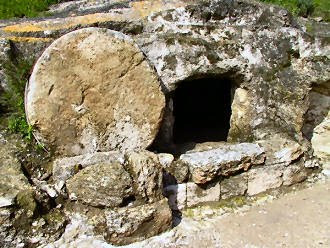 That hollowness we sometimes feel is not a sign of something gone wrong. It is the holy of holies inside of us, the uncluttered throne room of the Lord our God. Nothing on earth can fill it, but that does not stop us from trying. Whenever we start feeling too empty inside, we stick our pacifiers into our mouths and suck for all we are worth. They do not nourish us, but at least they plug the hole. Barbara Brown Taylor
Our search for God and our service to others will never be conducted in a neat world. Life will never submit to our good intentions, will never fall in line, will never stand still long enough to do our bidding.
Life will never cease to be a messy affair, and our spiritual journey will never be reduced to a tidying-up operation. God and the others don’t wait to enter our life until we have put it all in order. Our journey … is about finding God and serving others in the midst of the mess. The messiest place of all will be our own soul, our own life, which, despite our best efforts, will insist on remaining human. And it is into this mess, this confusion, that God and others will invite themselves. John Kirvan
‘Many of the congregations that claim “We’re a family,” lose sight of larger transformative purposes and settle, instead, for the comfort and satisfaction of their members. The core purpose of a congregation – growing people of faith and helping people and communities move from despair to hope – gives way to lesser and even contrary purposes like keeping people happy. While it may not be a necessary outcome of the use of the family image, many congregations that gravitate towards it seem to make member comfort and satisfaction their de facto purpose.That may be because “family” suggests to people something like, “We’re all loving and nice here.” That in turn often means no hard questions are asked and no honest challenges are allowed. It wouldn’t be nice.
I can think of other reasons to be cautious about “family” as our image for church. Families sometimes keep secrets that shouldn’t be kept in order to keep from bringing shame on the family name. And families aren’t typically that easy to join. Two of our sons were married in recent years. Turns out that putting families together is a fairly complex dance.
One last issue. The use of the term “family,” may communicate to people who are not married or to the married without children that they don’t quite fit. “Our church is a family,” morphs into “our church is for families.”
Keeping the family members happy, having everyone know everyone else and get along like “a happy family,” isn’t really the point for Christian congregations. Their goal and purpose is both different and higher.
Perhaps other biblical images like “People of God,” “Creation of the Holy Spirit,” or “Body of Christ” are better ecclesiological images? It’s not that these images don’t also have potential pitfalls. It is the case, however, that unlike “family” they are uncommon enough that people seldom have their own set ideas about what they mean. In some congregations, I hear leaders address the congregation simply as “church.” That too seems promising, reminding the gathered community that they are the Church of Jesus Christ (and the building is not).
If we must use “family,” we should be aware of the way that Jesus, while using “family,” also subverts conventional understandings of family and challenges their usual boundaries with a thoroughly new vision of “family.”’
Only real love waits while we journey through grief. That is the real trustworthiness between people. In all the epics, in all the stories that have lasted through many lifetimes, it is always the same truth: love must wait for wounds to heal. It is this waiting that we must do for each other, not with a sense of mercy, or in judgment, but as if forgiveness were a rendezvous. How many are willing to wait for another in this way? Very few. (Anne Michael)
 It is not uncommon for people who study the Bible at degree level to be overwhelmed by the 'scientific' method of biblical studies they meet in the university. Some lose their faith, not because their faith was shown to be utterly devoid of value or sense, but because they did not recognise the assumptions behind what they were being taught in their degree program, and place these assumptions under scrutiny. Some leave utterly bewildered and lost, others retreat into literalism. Still others embrace the scientific method, recognising the sheer rationality of the 'science'. (The historical-critical method is a very powerful tool.) However, they too might miss the assumptions behind what they are being taught, possibly because they already hold similar assumptions! I'm thinking here, for example, of the assumption that God does not enter into our history from, in some real sense, outside it, and that everything must have a 'natural' cause (and only a natural cause) to be considered anything but superstition.

And if only we arrange our life in accordance with the principle which tells us that we must always trust the difficult, then what now appears to us as the most alien will become our most intimate and trusted experience. How could we forget those ancient myths that stand at the beginning of all races, the myths about dragons that at the last moment are transformed into princesses? Perhaps all the dragons in our lives are princesses who are only waiting to see us act, just once, with beauty and courage. Perhaps everything that frightens us is, in its deepest essence, something helpless that wants our love.
(Rainer Maria Rilke Letters to a Young Poet)


The presence of Jesus brings joy and peace to those who experience it. But it never brings comfort without also bringing a gift that we cannot bear as it is so shattering to our pride, and without also bringing a costly demand upon our minds and actions. Jesus being with us where we are means our being with him where he is. If Jesus is with you, what is he demanding of you - urgently - in your actions about poverty, or peace, or race, or your neighbour? If Jesus is with you, he will not let you wear blinkers about your relations with your fellows. If Jesus is with you, your life may be turned inside out. (Michael Ramsay)

Only in the flesh, not in the spirit, can destiny and history come into being. (Romano Guardini)